


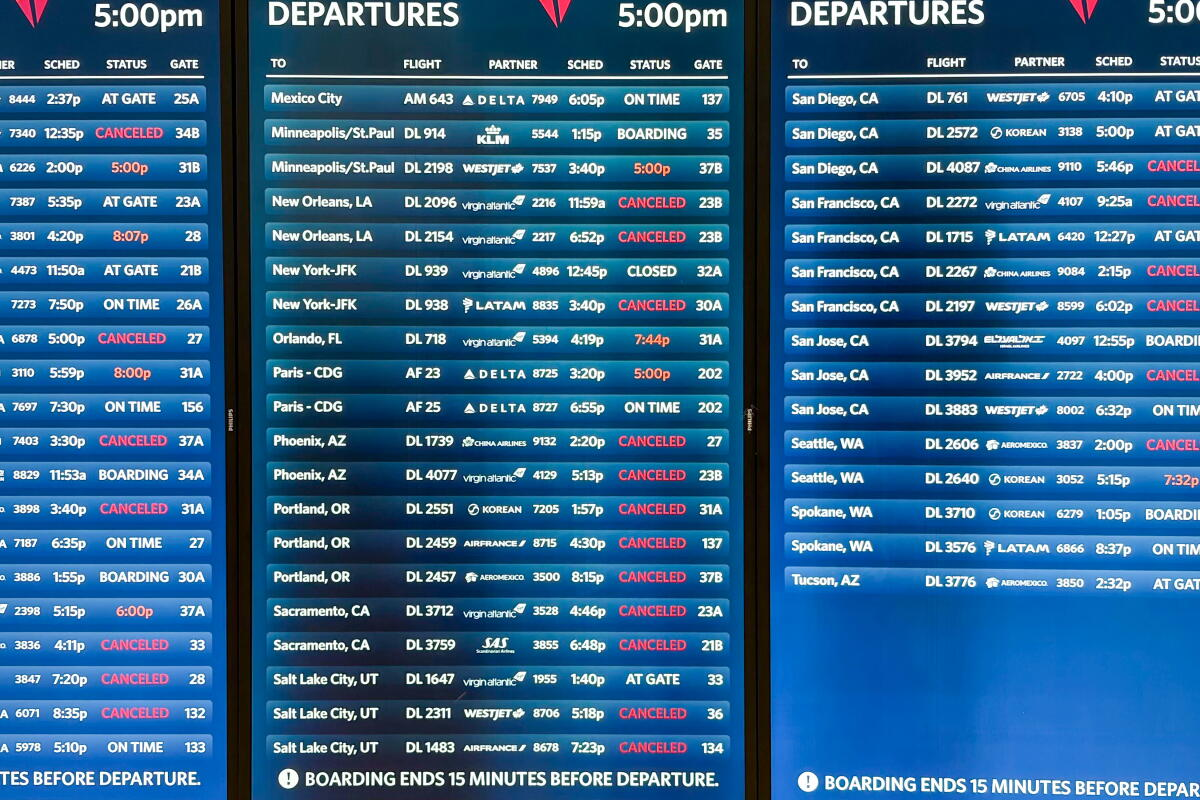
A failure in the air traffic control (ATC) communication system has led to widespread flight cancellations and delays across the United States, persisting for several days. On the 15th, U.S. Secretary of Transportation Sean Duffy stated that air travel was expected to gradually resume that day; however, due to the displacement of aircraft and flight crews, a full return to normal operations might not occur until the 16th.
On the afternoon of the 13th (local time), the U.S. Federal Aviation Administration (FAA) issued a rare nationwide ground stop—halting nearly all departing flights for nearly five hours—due to instability in the radar and communication systems at air traffic control centers. This marked the longest nationwide ground stop since the September 11, 2001, terrorist attacks. Although the order was lifted that evening, the resulting ripple effects caused significant, ongoing disruptions to flight operations over the following days.
According to data from the flight-tracking website FlightAware, approximately 9,200 flights were canceled and nearly 7,500 were delayed on the 13th. On the 14th, over 6,400 flights were canceled and more than 8,000 were delayed; on the 15th, there were still over 1,600 cancellations and nearly 3,600 delays. Airlines such as JetBlue and American Airlines experienced particularly high cancellation rates, with major hubs like Chicago O'Hare and Atlanta Hartsfield-Jackson hit especially hard. Tens of thousands of passengers were left stranded at airports, with some flights forced to wait for extended periods on taxiways.
Secretary Duffy and FAA officials have preliminarily attributed the failure to a data overload that occurred while a contractor, L3Harris, was upgrading communication equipment—replacing aging copper cables with fiber optics and installing new routers—in states including Arkansas and Texas. Anomalous connection requests overwhelmed the systems, disrupting the transmission of communication and radar data across 17 en-route air traffic control centers. There is currently no evidence of a cyberattack, and the root cause remains under investigation.
This incident has once again highlighted the issues of aging equipment and insufficient redundancy within the U.S. air traffic control system. Donald Trump has called on Congress to provide additional funding for the modernization of the ATC communication network. The FAA stated that the system has stabilized and is working closely with airlines to coordinate the rescheduling of flights.
